

When you are stuck at home and bored, you just need a simple, fun project you can start right away. Most lists fail because they ask for craft supplies you do not own or hours of free time you do not want to spend.
Here are ten practical activities that use items already sitting around your house. Some take ten minutes, while others can stretch into an hour.
Each idea includes a clear first step so you can take action immediately instead of wondering how to begin.
1. Make Something: Try a Paper Airplane Landing Challenge
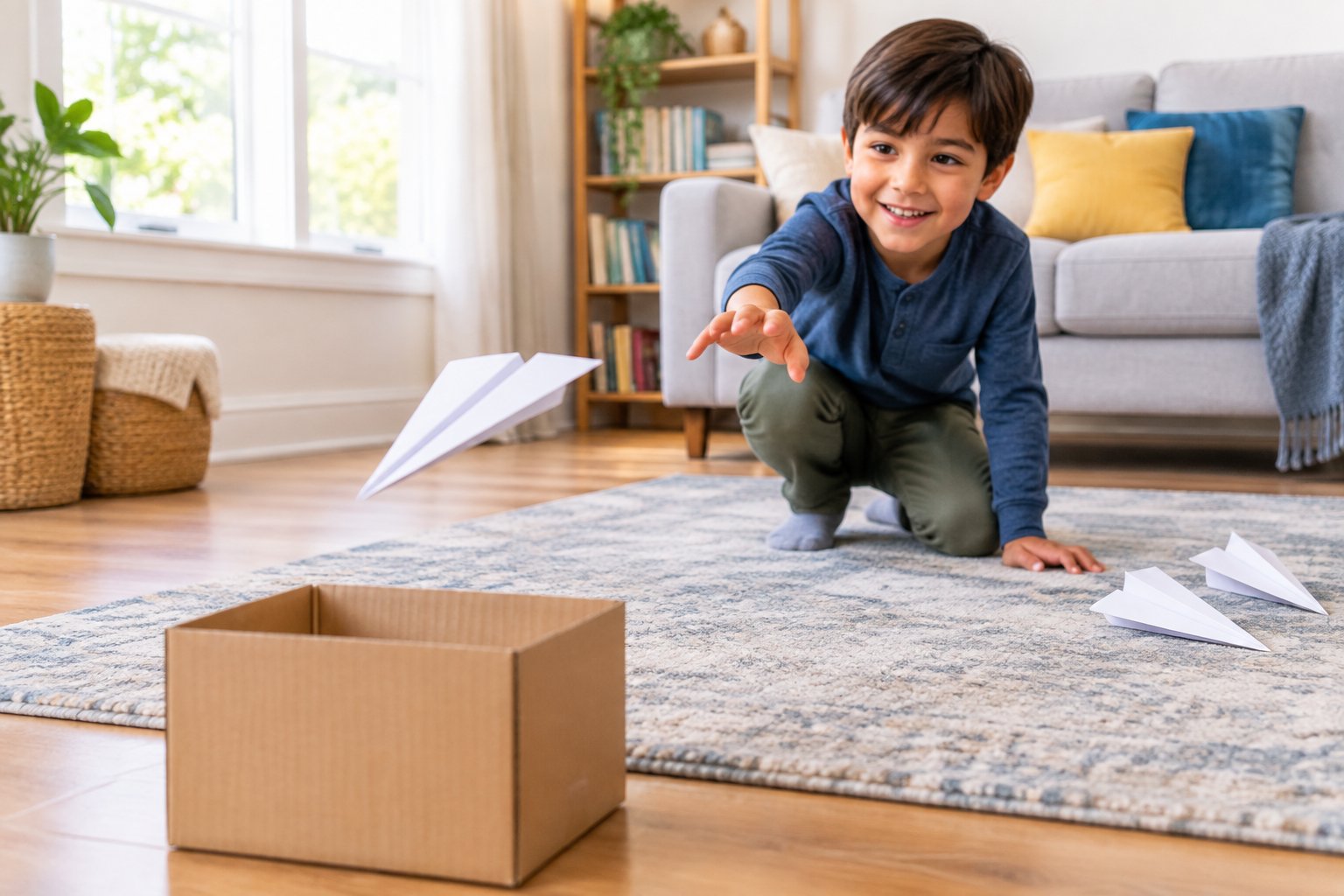
A paper airplane landing challenge turns a sheet of scrap paper into ten minutes of genuine competition. Fold a basic dart-style plane (nose fold, then two wing folds down the centerline), grab a cardboard box or laundry basket, and set it across the room.
Score points by distance zones: one point for landing anywhere in the box, three for hitting a taped target inside it. Fold two or three plane designs and test which one flies straighter.
The materials cost nothing. You get an easy game you can play by yourself or with family, and trying to beat your high score makes it fun to keep tossing.
2. Make Something: Build a Blanket Fort
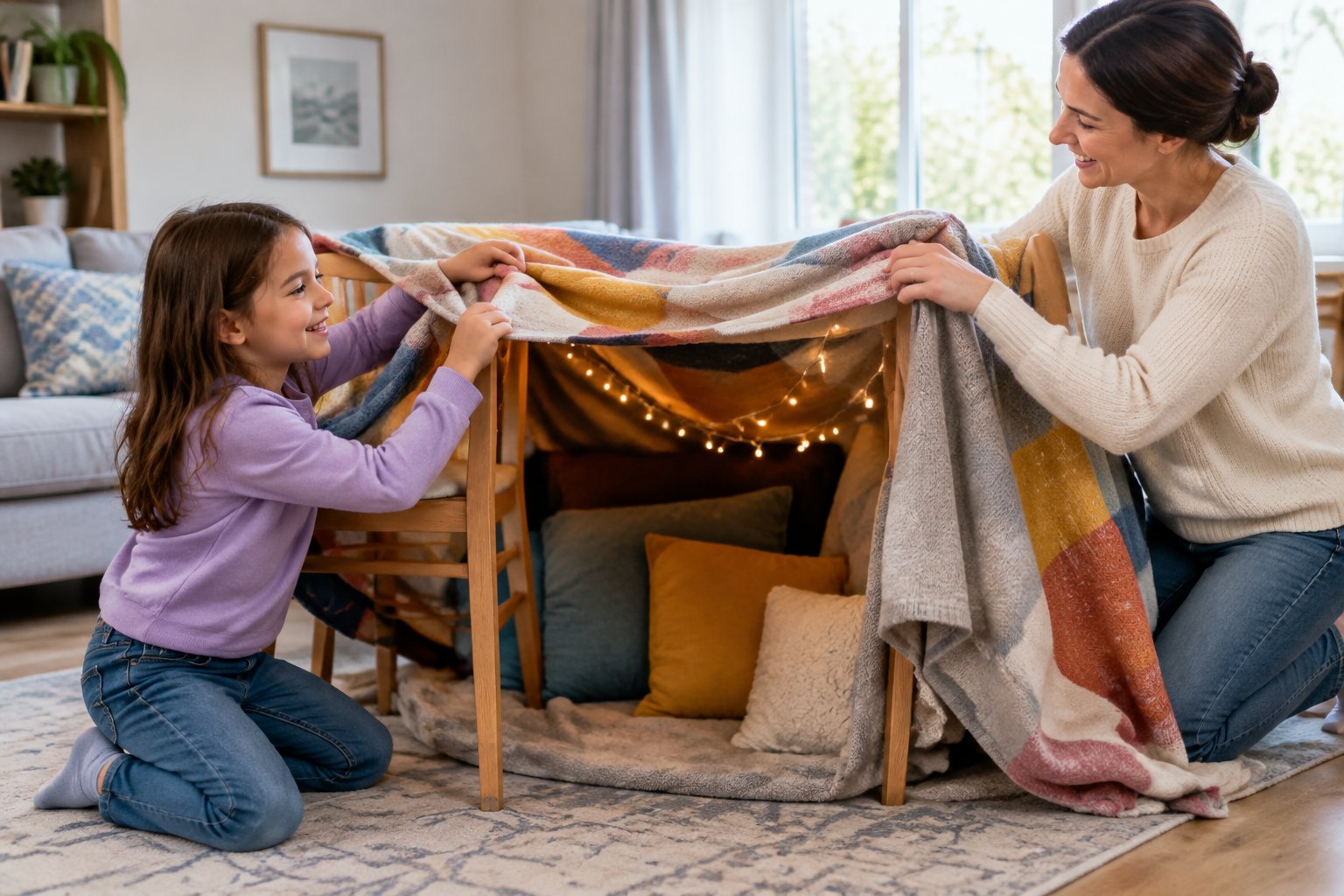
A blanket fort gives you a finished structure in under 20 minutes using furniture you already have. Drape a sheet or blanket between two chairs, the back of a couch, or a table edge, then weigh the corners down with books or pillows.
Add a flashlight or string lights inside, plus a couple of cushions to sit on. If the fort holds up after a test crawl-through, it’s done.
This one scales easily: a single chair and a sheet works fine solo, while a bigger group can link two or three blankets into connected rooms. For anyone who wants to push the structural side further outdoors later, the same folding and anchoring logic shows up in guides on how to make a camping tent from scratch.
3. Make Something: Bake a Microwave Mug Cake
A mug cake gets you a warm dessert in about five minutes of active work and 90 seconds of cook time. It solves boredom and a sweet craving in one shot.
Ingredients:
- 4 tablespoons all-purpose flour
- 4 tablespoons granulated sugar
- 2 tablespoons unsweetened cocoa powder
- 1/8 teaspoon baking powder
- Pinch of salt
- 3 tablespoons milk
- 3 tablespoons vegetable oil or melted butter
- 1/4 teaspoon vanilla extract
- Optional: 1 tablespoon chocolate chips
- Yield: 1 mug cake
- Prep time: 5 minutes
- Cook time: 60 to 90 seconds
- Equipment: One microwave-safe mug (at least 12 oz)
Method:
- Whisk the flour, sugar, cocoa powder, baking powder, and salt directly in the mug.
- Add the milk, oil, and vanilla extract. Stir until smooth with no dry pockets.
- Fold in chocolate chips if using.
- Microwave on high for 60 seconds. Check the center; if it’s still wet, microwave in 10-second bursts until just set.
- Let it sit for 1 minute before eating; it firms up slightly as it cools.
Overcooking is the main risk since microwaves vary. Pull it as soon as the top looks dry rather than waiting for a fully firm center.
4. Get Moving: Take a Three-Song Dance Break
A three-song dance break gets your heart rate up in about ten minutes with zero equipment. Pick three songs you know well, put your phone or speaker somewhere central, and clear a few feet of floor space.
Dance through all three without stopping. The point isn’t choreography, just continuous movement.
This works in any living room or kitchen, and it is great on your own when no one is watching. Moving to good music lifts your spirits right away without feeling like work.
5. Get Moving: Create a Five-Move Living-Room Circuit
A five-move circuit turns 15 minutes of floor space into a full-body workout. Pick five moves that need no equipment: squats, push-ups, high knees, lunges, and plank holds work well together.
Do 30 seconds of each move, rest 15 seconds, then repeat the full circuit two more times. Use a phone timer so you’re not counting in your head.
Push the couch back a few feet if the room feels tight; this circuit only needs about a 4-foot by 4-foot patch of clear floor. Anyone who wants a longer-term movement habit might look at creative fun hobbies to try for ideas that build on basic fitness.
6. Try a Creative Skill: Draw a Six-Panel Comic
A six-panel comic gives your drawing skill a finish line, unlike an open sketchbook page that can feel endless. Fold a sheet of paper into six equal boxes (two folds one way, one fold the other), or draw six boxes by hand with a ruler.
Pick a tiny story: a character wants coffee, faces one obstacle, gets the coffee. Stick figures work fine. The goal is panel-to-panel storytelling, not polished art.
Six panels usually takes 20 to 30 minutes start to finish. That is short enough to complete in one sitting, which matters far more than drawing quality.
Readers interested in taking sketching further can explore origami and paper-craft techniques in the ultimate beginners guide to origami, quilling, and paper toys for another tactile project.
7. Try a Creative Skill: Write a 100-Word Mystery
A 100-word mystery forces a complete story into a tight space, which makes it far less intimidating than “write a short story.” Set a word count target of exactly 100 and give yourself one detective, one clue, and one twist ending.
Open with the crime in the first line so there’s no slow setup to worry about. Aim to plant the clue by word 40 and resolve it by word 90.
Writing a tiny story takes about 15 minutes and keeps things fun. By the end, you have a complete, clever tale to share or keep in your journal.
8. Do Something Together: Set Up an Indoor Scavenger Hunt
An indoor scavenger hunt turns any house into a game board in about ten minutes of setup. Write five to eight clues on scraps of paper, each one leading to the next hiding spot (“look where you keep the forks”), and hide a small prize at the final stop.
This works with kids, roommates, or a partner, and it holds up for repeat play since you can swap the clues and hiding spots each round. Keep clues specific enough to solve without a hint but vague enough to require actual searching.
A round usually runs 10 to 20 minutes depending on house size and number of players.
9. Do Something Together: Play Homemade Charades
Homemade charades needs nothing but paper and two or more people to get started. Write 15 to 20 prompts on slips of paper (movies, animals, actions), fold them into a bowl, and take turns acting one out silently while others guess.
Set a 60-second timer per turn to keep the pace moving. Split into teams if you have four or more players, tracking points on a scrap of paper.
This holds up well for repeat rounds since the prompt bowl can absorb new ideas indefinitely.
10. Do Something Together: Stage a Sock-Puppet Show
A sock-puppet show gets a full cast of characters out of a laundry basket in under 15 minutes. Grab a few mismatched socks, add button eyes or marker faces, and improvise a two-minute scene between two or three characters.
No script is necessary. Give each puppet one trait (grumpy, nervous, overly confident) and let the scene build from there.
This works especially well with kids since the puppets do the performing, taking the pressure off anyone shy about acting. A cardboard box turned on its side makes a simple stage if you want to frame the show.
How to Pick an Activity You Can Start Right Now
To pick an idea quickly, just look at how much time and space you have right now.
| Activity | Time | Space | Materials | Group Size |
| Paper Airplane Challenge | 10 mins | Small room | Paper, box or basket | Solo or Group |
| Blanket Fort | 20 mins | Living room | Blankets, chairs, cushions | Solo or Group |
| Microwave Mug Cake | 5–10 mins | Kitchen | Pantry staples, mug | Solo |
| Three-Song Dance Break | 10 mins | Small room | Music player | Solo |
| Living-Room Circuit | 15 mins | 4×4 ft floor patch | None | Solo |
| Six-Panel Comic | 20–30 mins | Desk or table | Paper, pen or pencil | Solo |
| 100-Word Mystery | 15 mins | Desk or couch | Paper or phone | Solo |
| Indoor Scavenger Hunt | 10–20 mins | Entire home | Paper slips, small prize | Group (2+) |
| Homemade Charades | 15–30 mins | Living room | Paper slips, bowl | Group (2+) |
| Sock-Puppet Show | 15 mins | Small room | Socks, markers | Solo or Group |
How much time do you have?
Ten minutes or less points to a dance break, a paper airplane round, or a sock-puppet scene. A free hour opens up the mug cake, a full circuit workout, or a six-panel comic.
How much space can you use?
A small room or apartment corner handles the dance break, comic drawing, or mystery writing fine. A blanket fort, scavenger hunt, or living-room circuit needs a clear patch of floor, roughly the size of a rug.
What materials are already within reach?
Paper and a pen cover four items on this list: the airplane, the comic, the mystery, and charades prompts. The mug cake needs pantry basics, and the fort needs a blanket plus something to anchor it.
Are you on your own or with someone?
If you want some quiet time by yourself, try the mug cake, drawing, or mystery writing. If the kids or your family are around, try the blanket fort, charades, or the scavenger hunt.
Frequently Asked Questions
What can I do when I’m bored at home with no supplies?
A dance break, a fold-and-draw comic on any scrap paper, or a 100-word mystery written on your phone all need nothing beyond what’s already in the room. Even a blanket fort works with items most households already own, like sheets and couch cushions.
Which of these activities costs the least?
The dance break and the living-room circuit cost nothing since they use only your body and existing floor space. Charades and the scavenger hunt come close behind, needing only paper and a pen you likely already have.
What can I do at home when I’m bored alone?
The mug cake, six-panel comic, 100-word mystery, dance break, and living-room circuit all work solo with no second person required. Each one gives a finished result (a dessert, a drawing, a story, a workout) within 30 minutes or less.
Which activity can I start with a friend right now?
Homemade charades starts fastest with another person since it only needs paper, a pen, and a bowl for the folded prompts. The scavenger hunt and sock-puppet show also come together quickly once a second person is in the room to play along.
Which of these ideas work for kids and teens?
The blanket fort, sock-puppet show, and scavenger hunt are big hits with younger kids who love building and playing pretend. Older kids and teens usually prefer drawing a comic, baking a mug cake, or writing a quick story.
